Table of Contents
ToggleImagine jamming with your favorite band while sitting on your couch, or attending a concert where the lead singer is literally in your living room. Sounds like a sci-fi dream, right? Welcome to the world of augmented reality in music, where the boundaries of sound and sight blur into an exhilarating experience.
Overview Of Augmented Reality In Music
Augmented reality transforms how individuals experience music. Musicians and fans explore innovative ways to engage through applications that overlay digital elements onto real-world settings. Concerts can become immersive experiences as virtual performers appear alongside live artists.
Technology enhances audience interaction. Users might see lyrics displayed in their environment while listening to a track. Apps allow for personalized music-related experiences, such as visual effects that sync with rhythm.
Collaborative tools also emerge, enabling remote jamming sessions. Musicians can connect in real-time, regardless of location, facilitating creative exchanges. This shift opens new avenues for collaboration and creativity.
Educational platforms incorporate augmented reality, enhancing learning. For instance, students can visualize music theory concepts through interactive elements. This application fosters a deeper understanding of various musical components.
Industry use cases demonstrate the versatility of this technology. Festivals can offer AR experiences, heightening engagement for attendees. Brands incorporate augmented reality in marketing campaigns, allowing consumers to interact with artists in unique ways.
Market trends reflect growing interest in augmented reality within the music sector. A report from Statista indicates that the global AR market is projected to reach $198 billion by 2025. As technology advances, the integration of augmented reality in music will likely expand, encouraging even more innovative applications.
Artists increasingly leverage augmented reality for promotion. Social media platforms host AR filters that provide fans with unique ways to connect with their favorite musicians. Such creativity plays a significant role in marketing strategies, helping artists build brand identity.
Applications Of Augmented Reality In Music
Augmented reality offers various applications that significantly enhance music experiences. These applications range from live performances to educational tools.
Enhancing Live Performances
Live performances undergo a transformation through augmented reality. Virtual elements augment stage setups, making concerts more immersive. Musicians collaborate with AR technology to interact with audiences in real time. Fans enjoy shared experiences when visual effects synchronize with the music. For instance, festivals integrate AR for immersive experiences that captivate attendees. Attendees can see virtual performers appear alongside their favorite artists, enriching their connection to the performance. This technology allows for unique visuals that complement the sound, fostering greater engagement.
Interactive Learning Experiences
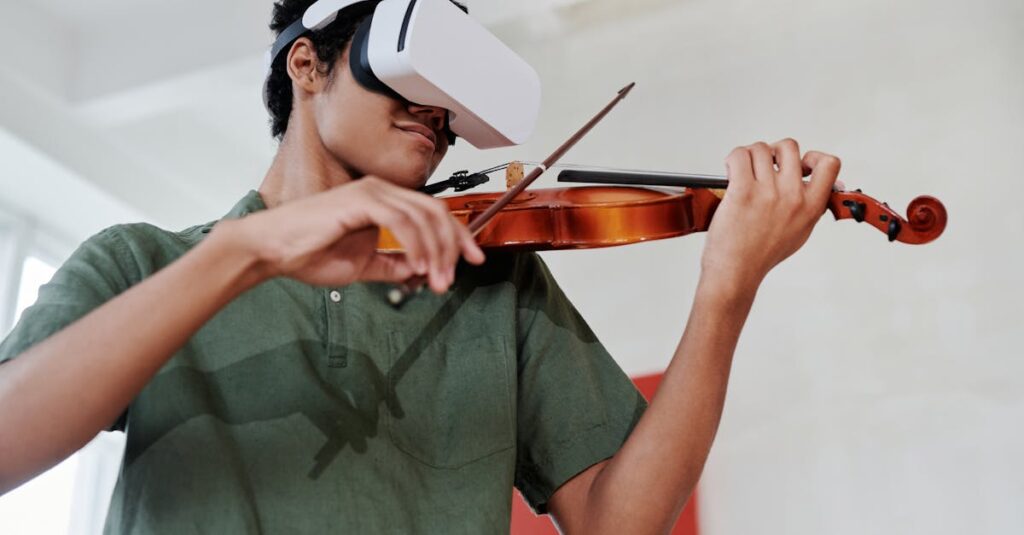
Interactive learning experiences emerge through augmented reality in music education. Students visualize complex music theory concepts with engaging digital elements. AR applications enable learners to manipulate musical instruments virtually, enhancing understanding. Educators utilize AR to create interactive lessons, making music theory more accessible. For example, students can practice hand positions and chord structures in a 3D space. Musicians benefit from real-time feedback, allowing for immediate improvement. Resources such as virtual sheet music provide learners with immediate access to materials. As AR continues to evolve, it brings an unprecedented level of interaction to music education.
Benefits Of Augmented Reality In Music
Augmented reality (AR) significantly enhances music experiences for audiences and performers. This technology creates unique interactions that enrich engagement and immersion.
Engaging Audiences
Engagement levels soar with AR technology in music. Concert attendees interact with virtual elements, such as live lyric displays and personalized visual effects. Audiences can participate in real-time through gamified experiences, making performances more dynamic. Musicians also see benefits, as AR fosters deeper connections with fans. The combination of virtual and physical environments encourages social sharing, enhancing promotion of both artists and events.
Creating Immersive Experiences
Immersive experiences captivate attendees in ways traditional concerts cannot. Spectators enjoy virtual performers appearing alongside live artists, leading to seamless scenery transitions. Environments can be tailored to match the music’s mood, creating an emotional journey for listeners. Festivals utilize AR to offer interactive installations, drawing larger crowds and increasing overall excitement. Audiences engage their senses through compelling graphics and surround sound, transforming every performance into a memorable event. Integration of AR into music continues to evolve, promising an innovative future for live entertainment.
Challenges And Limitations
Augmented reality in music faces several challenges and limitations. These must be addressed for wider adoption and effectiveness in the industry.
Technological Barriers
Technological barriers impede the full integration of augmented reality in music. High-quality AR experiences often rely on advanced hardware, which can be expensive. Many users lack access to the latest smartphones or AR devices, limiting participation. Additionally, software development presents challenges, including the need for applications that function seamlessly across different platforms. Bandwidth issues can also affect real-time interaction, especially during live performances. As AR technology continues to evolve, overcoming these obstacles becomes essential for enhancing user experiences in music.
User Accessibility
User accessibility proves critical for the successful adoption of augmented reality in music. Many potential users may struggle with the complexity of AR applications. Intuitive design should prioritize ease of use to engage a broader audience. Furthermore, users with disabilities may find existing AR solutions inadequate or challenging to navigate. Education about using AR technology in music can help mitigate these concerns. Ensuring access across various demographics remains vital for fostering widespread acceptance and enjoyment of AR-enhanced music experiences.
Future Trends In Augmented Reality In Music
Augmented reality (AR) continues to shape the music industry, introducing groundbreaking trends. Artists are experimenting with immersive concerts where virtual performers enhance live experiences. Fans engage with gamified elements that allow them to interact with their favorite musicians.
Moreover, educational tools leverage AR to make music theory interactive. Students visualize complex concepts through virtual elements, elevating their learning experience. Applications provide instant feedback and allow users to manipulate digital instruments.
Festivals increasingly incorporate AR experiences, immersing attendees in a blend of the virtual and real. Expectations rise for brand collaborations that utilize AR in marketing campaigns, creating dynamic interactions with audiences. By 2025, the global AR market in music could reach $198 billion, illustrating the growing demand for these innovative experiences.
As technological advancements occur, improved hardware and software enhance AR compatibility. Accessibility remains a focal point, as designers aim to create user-friendly applications. Addressing barriers for users with disabilities is vital for broader acceptance of AR in music.
Artists harness social media to promote their work using AR filters, deepening connections with fans. The interaction between musicians and listeners transforms, encouraging shared experiences. In this evolving landscape, the integration of AR into music fosters creativity and engagement, suggesting a promising future.
Augmented reality is revolutionizing the music landscape by creating immersive experiences that engage audiences like never before. As technology evolves the potential for AR in music continues to grow offering innovative ways for fans and musicians to connect.
From virtual concerts to interactive educational tools AR paves the way for deeper engagement and creativity. The future looks bright as artists explore new frontiers and festivals embrace this technology.
As barriers to accessibility are addressed and user-friendly applications become the norm the music industry stands poised for a transformation that will redefine how music is experienced and enjoyed.