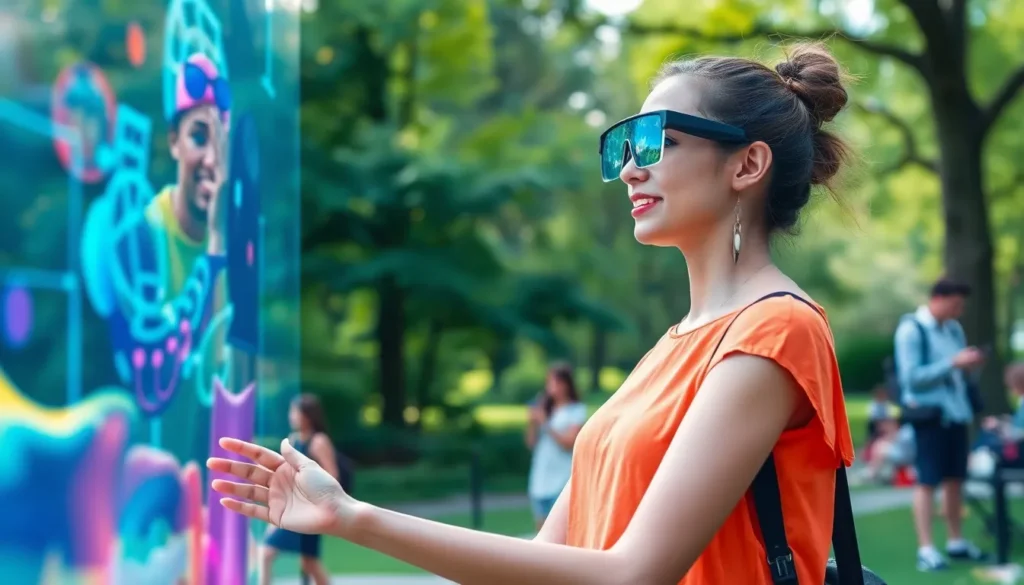
Imagine strolling through your favorite park only to discover it’s a treasure trove of hidden wonders. With augmented reality exploration, the ordinary transforms into the extraordinary. It’s like wearing magic glasses that reveal a world brimming with interactive experiences just waiting to be uncovered.
Overview of Augmented Reality Exploration
Augmented reality exploration enhances real-world environments with digital elements. Users encounter interactive experiences that blend seamlessly with their surroundings. Parks become venues where hidden historical facts appear as users walk, enriching knowledge through tangible interaction.
Many applications exist for augmented reality exploration. Smartphones unlock layers of information, making it possible to view art installations or historical landmarks in new ways. Devices like smart glasses also enable augmented experiences, offering hands-free exploration.
Educational institutions utilize augmented reality to facilitate immersive learning. Students engage with complex subjects by visualizing biological processes or exploring astronomical phenomena. With augmented reality, classroom walls transform into interactive learning landscapes.
Gaming incorporates augmented reality to create dynamic experiences. Popular games, such as Pokémon GO, invite players to explore neighborhoods while capturing virtual creatures. This integration fosters a sense of community as players interact with one another in physical spaces.
As technology advances, augmented reality continues to evolve. The integration of artificial intelligence escalates the interaction quality, personalizing experiences for each user. Future developments suggest that augmented reality exploration will encompass even more areas, including tourism and retail, enhancing how individuals experience the world.
Augmented reality exploration reshapes how people perceive and interact with their environments. Users discover added layers of engagement in familiar spaces, leading to richer experiences that blend the digital with the physical.
Key Technologies Behind Augmented Reality
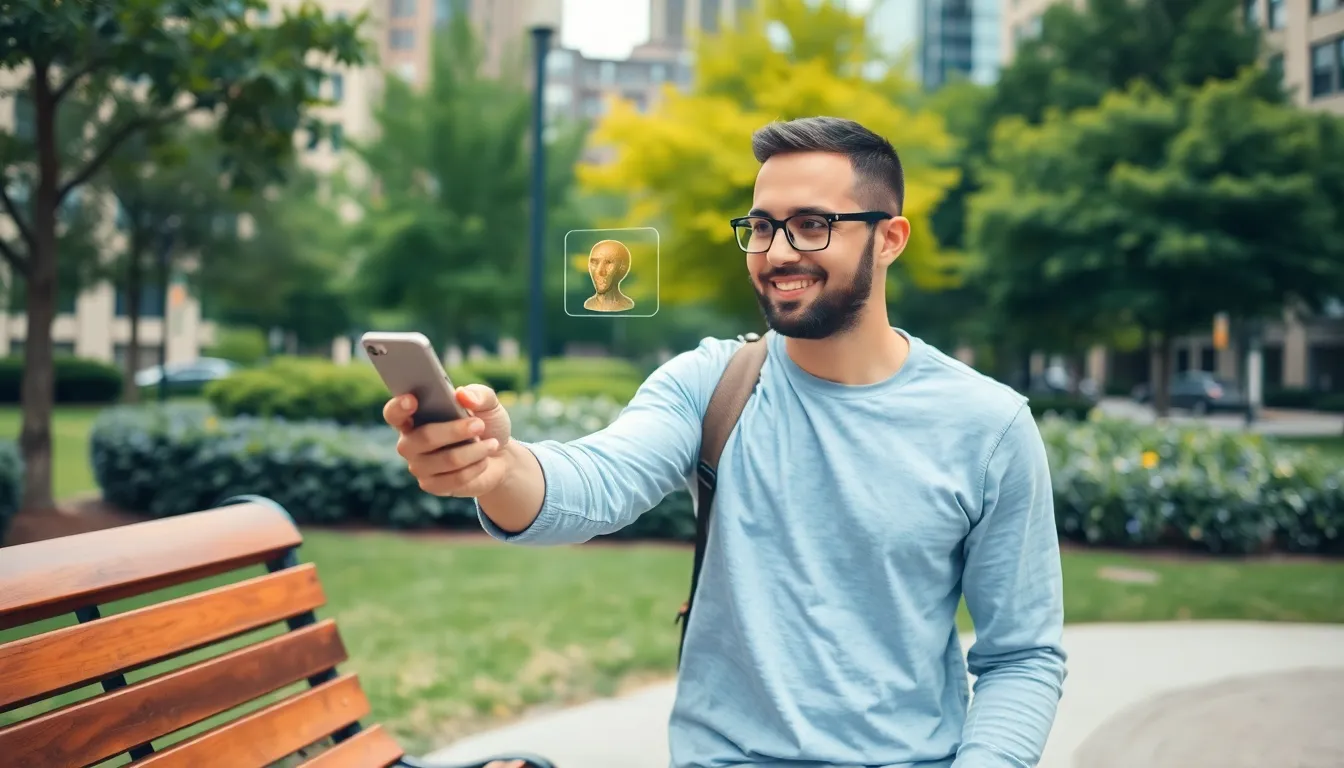
Augmented reality relies on several key technologies to create engaging experiences. These technologies enhance interaction between virtual and real-world environments.
Computer Vision
Computer vision processes visual input from the environment, allowing devices to recognize physical objects and their spatial relationships. This technology plays a critical role in identifying flat surfaces for placing virtual elements, ensuring realistic interactions. Applications utilize algorithms that detect features and track movements in real-time. Consequently, users can experience seamless blending of digital content with their surroundings. Innovations in computer vision continually improve depth perception, enabling more advanced interactions in augmented environments.
Sensor Technology
Sensor technology includes various types that gather data from the user’s environment. This data integrates location, orientation, and motion, which are essential for accurate augmented reality experiences. Inertial measurement units, GPS, and depth sensors work together to create a precise understanding of the physical space. By leveraging these sensors, devices achieve greater accuracy when mapping virtual objects onto real-world settings. As sensor technology advances, augmented reality experiences become increasingly immersive and responsive, enhancing user engagement in educational, recreational, and commercial sectors.
Applications of Augmented Reality Exploration
Augmented reality exploration finds applications in various sectors, enhancing engagement and interactivity.
Education and Training
Educational institutions utilize augmented reality to transform learning environments. Students visualize complex subjects, like biology or astronomy, through interactive simulations. This engagement fosters deeper understanding and retention of knowledge. For example, biology students can explore the human anatomy by interacting with 3D models. Similarly, astronomy lessons become more immersive with virtual planetarium experiences. Teachers leverage AR tools to create dynamic lessons, making concepts easier to grasp. Ultimately, this technology bridges gaps in understanding and keeps students actively involved in their education.
Healthcare
In healthcare, augmented reality revolutionizes training and patient care. Medical students benefit from realistic simulations that replicate surgeries and patient interactions. These simulations enhance clinical skills, allowing students to practice in a safe environment. Surgeons also use AR to overlay critical information during procedures, improving accuracy and outcomes. For instance, AR can highlight blood vessels and organs in real-time, guiding better decisions in surgery. Furthermore, patient education improves as AR visualizations help individuals understand treatment processes. Overall, AR integrates seamlessly into healthcare, enhancing both education and practical applications.
Tourism and Navigation
Tourism experiences transform significantly with augmented reality. Travelers explore destinations through interactive guides that reveal historical and cultural insights. As users point their devices at landmarks, AR overlays information, enriching their understanding of the sites. Navigation becomes intuitive, as augmented reality apps provide step-by-step directions layered onto the real world. For example, visitors in a city can discover hidden gems with recommendations that appear as they walk. This technology not only enhances exploration but also fosters a deeper connection with locations. By integrating AR into tourism, the entire travel experience becomes more informative and engaging.
Challenges in Augmented Reality Exploration
Augmented reality exploration faces several challenges. Addressing these hurdles is essential for advancing the technology.
Technical Limitations
Technical limitations impede the full potential of augmented reality. Device hardware often lacks the processing power required for seamless graphics. Battery life poses a significant issue, especially in mobile devices designed for prolonged use. Additionally, limitations in connectivity can disrupt real-time data access. Environmental factors, such as lighting and spatial recognition, complicate accurate object mapping. Users may encounter difficulties in tracking movement and orientation, leading to a disjointed experience. As hardware and software evolve, these limitations will likely diminish, enhancing the overall effectiveness of augmented reality.
User Experience Issues
User experience issues hinder widespread adoption of augmented reality applications. Complexity in navigation often overwhelms users, who may struggle to understand how to interact with digital elements. Intuitive design remains crucial; otherwise, frustration sets in. Furthermore, users may feel disoriented or fatigued during extended sessions, impacting engagement. Privacy concerns arise when using location-based features, causing hesitation in adoption. Accessibility also presents challenges for individuals with disabilities, requiring more inclusive design. Improving user experience is vital for enhancing user satisfaction and promoting greater integration of augmented reality in everyday life.
Future Trends in Augmented Reality Exploration
Emerging trends in augmented reality exploration promise significant advancements. Integrating artificial intelligence enhances personalization, enabling experiences tailored to individual preferences. Increasingly, augmented reality applications will harness big data to offer contextualized insights based on user behavior and location.
Advancements in hardware, particularly with lightweight smart glasses, facilitate seamless integration into daily activities. These devices will allow users to experience augmented environments without the distraction of handheld devices. Furthermore, 5G technology is set to strengthen connectivity, resulting in faster data processing and improved interactive capabilities.
Collaborative augmented reality experiences will become more prominent, allowing groups to engage with digital elements simultaneously. This shift will foster social connections in both educational and gaming settings, enhancing community interaction. Tools that support real-time collaboration will likely enhance team projects and gaming strategies.
As augmented reality expands into sectors like tourism and healthcare, specific applications will reshape user experiences. In tourism, augmented guides will offer tailored information while users explore. Healthcare professionals will benefit from improved visualization tools allowing precise insights during procedures.
Privacy and security concerns will increasingly come under scrutiny. Finding solutions to protect user data will become essential as augmented reality becomes widespread. Balancing innovation and safety will be crucial for user trust and continued adoption.
Incorporating sustainability in augmented reality design may also emerge as a key trend. Developers might prioritize eco-friendly materials and energy-efficient technologies during production. These practices will align with growing consumer awareness around environmental impact.
Monitoring these evolving trends will provide insights into augmented reality’s future trajectory, ultimately enhancing experiences across various fields. Performance improvements and innovative applications will solidify augmented reality’s role as a transformative technology.
Augmented reality exploration is set to redefine how individuals interact with their surroundings. By merging digital elements with the real world, AR creates immersive experiences that enrich everyday life. As technology advances, the potential for AR applications in education, tourism, and healthcare continues to expand.
Addressing challenges related to user experience and privacy will be crucial for its widespread adoption. The future of AR promises innovative solutions that enhance engagement and foster deeper connections within communities. As awareness of sustainability grows, the design of AR experiences may also prioritize environmental considerations. Keeping an eye on these developments will be essential for understanding AR’s evolving impact on society.