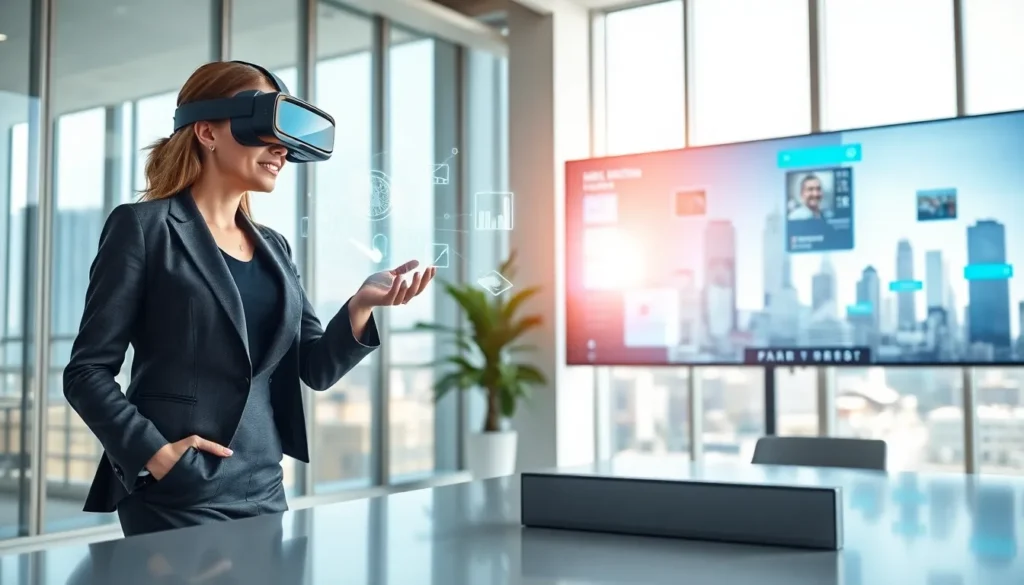
In a world where technology plays an increasingly pivotal role, the terms “mixed reality” and “augmented reality” often pop up like popcorn at a movie theater. They sound similar, yet they lead very different cinematic experiences. If you’re scratching your head, wondering whether they are the same thing or if one is just a fancier version of the other, you’re not alone. Let’s jump into these realities and make sense of what sets them apart. Hold on to your goggles, and let’s uncover this virtual maze.
Defining Mixed Reality
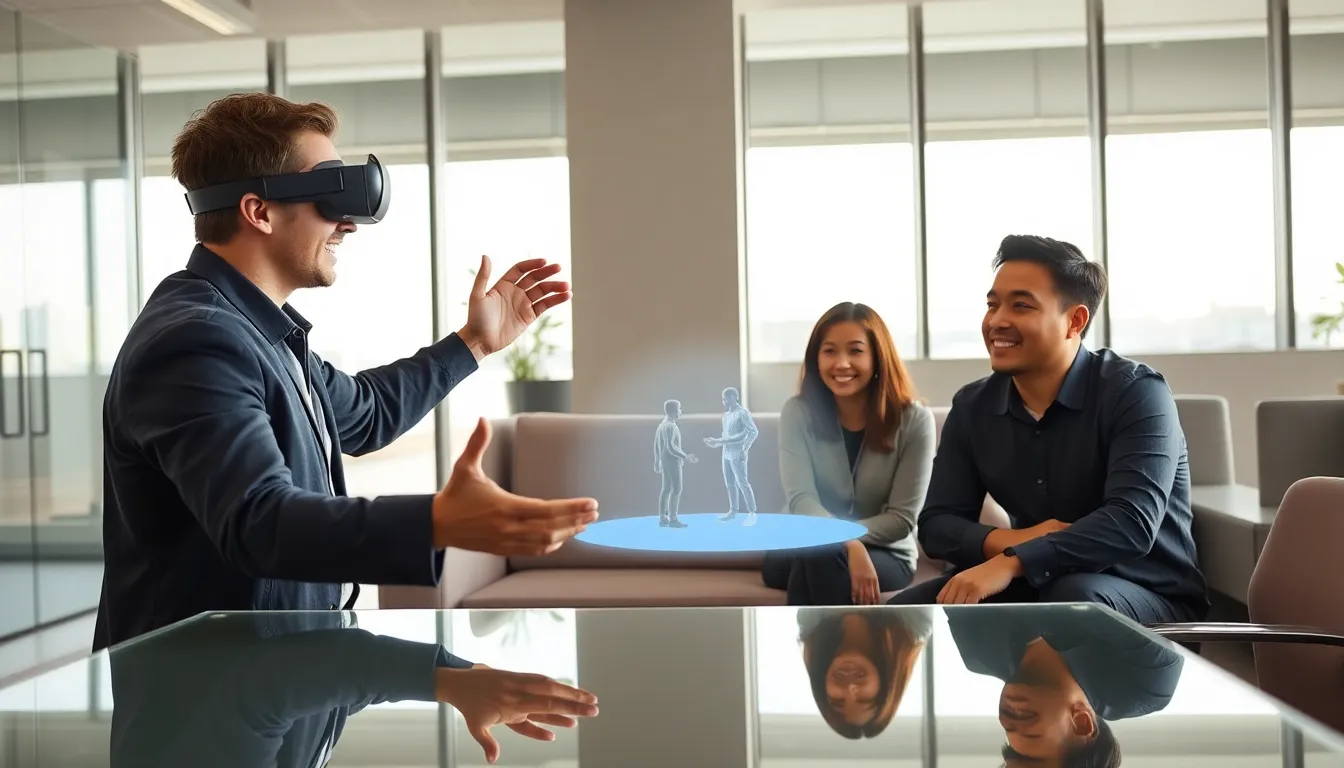
Mixed reality (MR) is the dazzling fusion of the digital realm with the physical world. Imagine wearing a headset that allows holograms to interact with real objects around you. For instance, with MR, a digital character could sit on your real couch, responding to your movements and expressions as if it were actually there. Unlike regular virtual reality, which completely immerses users in a digital environment, mixed reality enables a seamless combination of both worlds. Devices like the Microsoft HoloLens perfectly exemplify this technology, showcasing how elements can coexist and interact with tangible surroundings.
Defining Augmented Reality
Augmented reality (AR), on the other hand, enhances your view of the real world by overlaying digital content. Think of it as the cherry on top of your tech sundae. AR doesn’t require a complete digital environment like virtual reality but instead adds elements to your everyday experiences. Popular examples include mobile games like Pokémon GO, which superimposes animated creatures on your physical landscape. Users can see and interact with these extra elements through their devices, commonly smartphones or tablets. Apps like Google Maps also use AR, guiding users with real-time navigational cues integrated into their view of the street.
Key Differences Between Mixed Reality and Augmented Reality
At first glance, mixed reality and augmented reality might seem interchangeable. Yet, they diverge significantly in how they interact with the real world.
- Interaction: In mixed reality, users can engage with digital assets as though they exist in the physical world. In contrast, with augmented reality, digital overlays are more passive, usually not affected by physical surroundings.
- Immersion Level: MR provides a more immersive experience. Users feel as if they are part of a merged environment. AR, while engaging, remains a supplementary enhancement rather than a full-fledged integration.
- Technology Requirement: Implementing mixed reality often requires more advanced hardware, such as specialized headsets. Augmented reality commonly operates through smartphones or tablets, making it more accessible but less interactive.
- Use Cases: MR finds its niche in fields like education, design, and gaming, offering complex interactions. AR excels in simpler applications focused on enhancing user experience immediately, such as filters in social media apps.
Applications of Mixed Reality
The applications of mixed reality are vast and varied, showcasing its potential to revolutionize numerous fields.
- Education: Imagine students exploring the human body by observing a 3D hologram, rotating it to view each organ up close. MR can make complex subjects engaging.
- Healthcare: Surgeons can plan procedures by visually mapping their operations while interacting with 3D models of patients’ anatomy, enhancing accuracy.
- Design and Prototyping: Architects can visualize 3D buildings within a physical space before construction, helping to identify potential issues before they arise.
- Entertainment: Gaming merges with reality as players use their surroundings in immersive gameplay experiences, from battling monsters in their living room to collaborating on shared quests with friends.
Applications of Augmented Reality
Augmented reality also boasts a diverse arsenal of applications across various sectors.
- Retail: Shoppers can use AR apps to visualize how furniture fits in their living rooms. Such an interactive experience transforms how consumers make purchasing decisions.
- Tourism and Navigation: Tourists can point their cameras at landmarks to receive information and historical context, enriching their experience in unfamiliar places.
- Gaming: AR games engage users by blending gameplay with real-world interactions, from geocaching adventures to simple mobile-based experiences.
- Advertising: Brands leverage AR to create interactive advertisements, allowing consumers to engage in novel ways with products, so enhancing brand loyalty.
Future Trends in Mixed Reality and Augmented Reality
As technology advances, both mixed reality and augmented reality are poised to undergo transformational changes.
- Integration with AI: Incorporating artificial intelligence could refine user interactions, making digital entities more responsive and realistic within both realities.
- Enhanced Hardware: Expect lighter, more powerful hardware that makes obtaining mixed reality experiences as simple as picking up a pair of stylish glasses.
- Increased Applications: The use of AR in professional settings will likely expand, having profound implications in fields like training and disaster response. Mixed reality environments will become increasingly dynamic, accommodating more users within shared spaces.